Gutter Installation in Missoula, MT
Poor drainage can send water where it should not go and cause avoidable problems.
Request an Estimate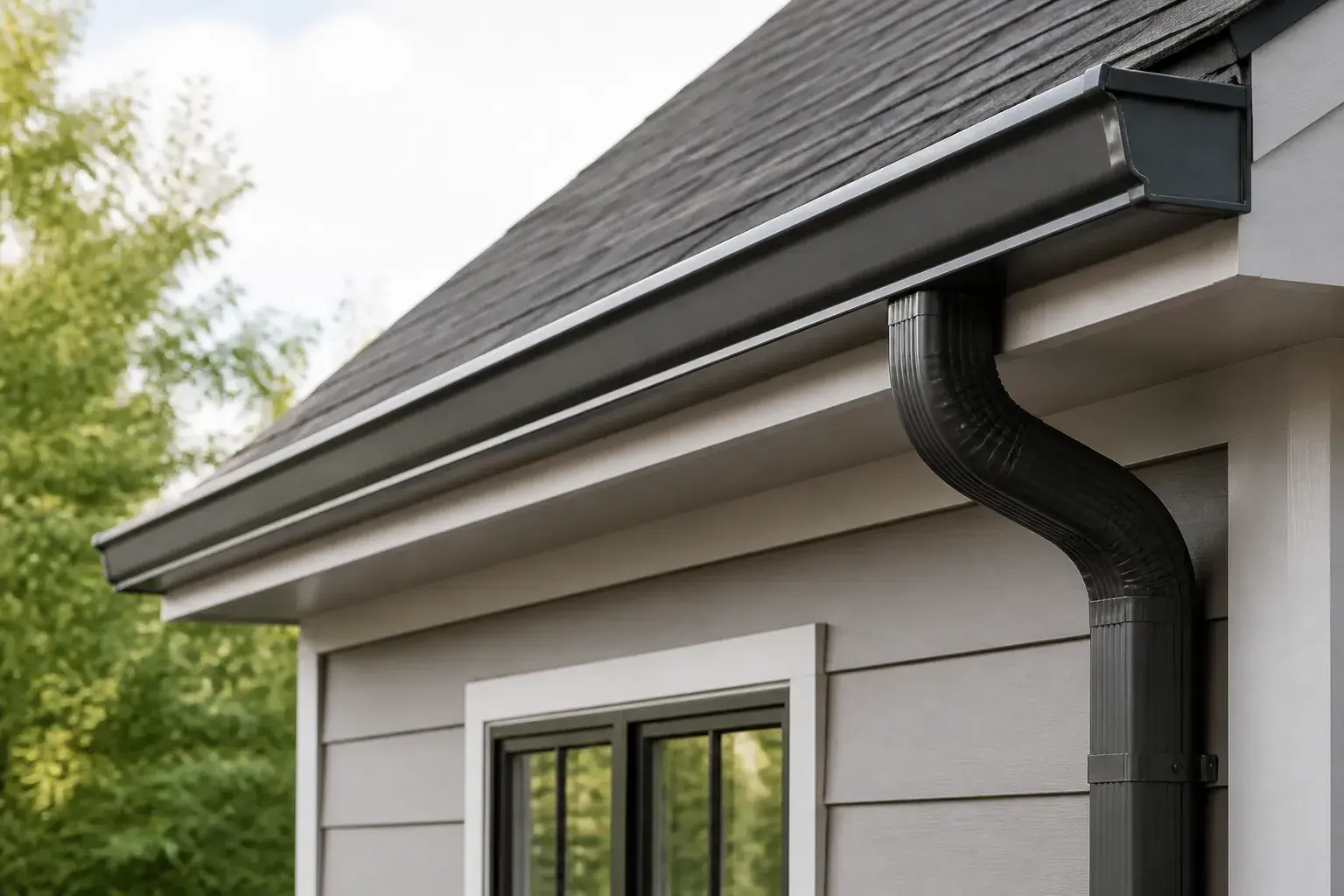
A gutter system should carry water away without overflowing, pulling loose, or leaving streaks on the siding. When the gutters start to bow, separate at the seams, or spill water over the edge, the problem usually shows up in the same places around the house: muddy splashback near the foundation, dripping corners, and wet areas that seem to come back after every rain. If that sounds familiar, it may be time to replace the system instead of trying to patch another weak section.
Tamarack Lane Roofing installs gutters for homeowners who want a straightforward fix and a clean job site when the work is done. We start with a written estimate, look at how the existing drainage is performing, and install a gutter setup that fits the home. If you are in Missoula, Lolo, Frenchtown, or Bonner and the gutters are no longer doing their job, the next step is simple: get the problem looked at before small overflow issues turn into bigger repairs.
Warning signs
Gutter problems usually show themselves in a few clear ways. A homeowner does not need to know everything about drainage to spot the warning signs, but it helps to know what to look for before water starts causing damage.
- Overflow at the edge: If water pours over the front during rain instead of flowing through the downspout, the system is not moving water correctly.
- Sagging sections: Gutters that dip in the middle often hold standing water, which adds weight and makes the problem worse.
- Visible separation: Open seams, gaps at corners, or sections pulling away from the fascia are signs the system is losing support.
- Staining and streaks: Dirty lines down the siding often mean water has been spilling where it should not.
- Pooling near the home: Puddles and soft spots near the foundation can point to a gutter layout that is not carrying runoff far enough away.
If more than one of these is happening, the gutters may be beyond a simple repair. In that case, replacing the system can be the cleaner, more reliable fix.
Common causes
Most gutter problems do not happen all at once. They build up over time until the system starts failing in obvious ways.
- Old sections: Materials wear down, fasteners loosen, and seams open up after years of use.
- Poor fit: Gutters that were not sized or placed correctly can overflow even when they are not damaged.
- Loose hangers: When supports fail, gutters begin to sag and collect water in the low spots.
- Incorrect slope: Gutters need the right pitch so water drains toward the downspout instead of sitting in the channel.
- Repeated repairs: When one section after another keeps failing, the whole system may need replacement instead of another patch.
A new installation addresses these issues at once by replacing worn parts, correcting the layout, and making sure the system is set up to move water where it belongs.
How we install
Tamarack Lane Roofing keeps the process simple and practical. We are a local residential roofer, and gutter installation is handled with the same attention to detail we bring to roof repair and roof replacement.
1. Review the home
We look at the current gutter setup, the roof edge, and the problem areas the homeowner has noticed. This helps us understand whether the issue is isolated or tied to the full system.
2. Provide a written estimate
We give a written estimate so you know what the project includes before work begins. That way, there are no surprises when it is time to schedule the installation.
3. Remove the failing system
If the existing gutters are beyond repair, we remove the worn sections carefully and prepare the area for the new installation.
4. Install the new gutters
We set the new gutters in place with the proper alignment so they can carry water toward the downspouts and away from the home.
5. Clean up the site
We leave the job site clean when we finish. That means less mess to deal with and a finished project that does not leave debris behind.
This kind of step-by-step approach matters because gutter work is about more than attaching a few sections to the roofline. The pitch, support, and placement all have to work together.
What homeowners get
A properly installed gutter system should do more than look neat from the curb. It should help the home handle runoff with less mess and fewer problem spots.
- Directed drainage: Water moves away from the roof edge and toward the downspouts instead of spilling over the side.
- Cleaner exterior surfaces: A working system helps reduce staining on siding and trim caused by overflow.
- Less splashback: By carrying water away from the house, gutters help limit dirt and water splatter around the base of the home.
- Better support: New gutters are secured so they stay in place instead of pulling loose or sagging under the weight of standing water.
- A neater finish: A fresh installation gives the home a cleaner look and replaces bent, leaking, or mismatched sections.
For many homeowners, the biggest value is peace of mind. Once the gutters are installed correctly, there is one less thing to worry about every time it rains.
When repair is not enough
Some gutter issues can be fixed with a small repair, but there are times when replacement is the smarter call. If the system keeps failing, the same problems often come back again and again.
- Multiple leak points: If water is escaping from several seams or corners, patching one spot will not solve the bigger issue.
- Repeated sagging: When hangers or sections keep loosening, the structure may be too worn to hold up well.
- Mismatched pieces: A mix of old and new parts can create weak points and uneven drainage.
- Poor runoff control: If water still ends up where it should not after repairs, the layout may need to be reworked.
In those situations, a full gutter installation can save time and frustration by replacing the problem instead of chasing it from one section to the next.
Working with the roofline
Gutters do their job only when they fit the roof edge correctly. That is why it helps to have a roofer handle the installation instead of treating the gutters as a separate afterthought.
The roof edge, fascia, and drainage points all affect how the system performs. If the gutters sit too low, slope the wrong way, or are set too far from the roofline, water can miss the channel or back up at the edge. By looking at the roof and gutters together, we can install a setup that makes sense for the home as a whole.
Tamarack Lane Roofing also handles roof repair, roof replacement, and roof inspections, so when gutter concerns show up alongside roof issues, we can see the full picture more clearly. That matters when a homeowner is trying to stop water from finding weak points around the house.
Common questions
How do I know if I need new gutters?
If you see sagging, repeated leaks, overflow, or separation at the joints, the system may be worn enough to replace.
Can new gutters help with water near the foundation?
Yes, a properly installed system helps carry runoff away from the house instead of letting it pool close to the base.
Do gutters need to match the roofline exactly?
They need to be positioned and sloped correctly so water can move through the system without sitting in low spots.
What if only one section looks bad?
One damaged section can sometimes be replaced, but if the rest of the system is worn, a full installation may make more sense.
How long does the process take to get started?
We begin with a look at the home and provide a written estimate, so you can decide on the project with clear information.
Will the site be cleaned up after the work?
Yes, we keep the job site clean and remove the mess associated with the installation.
Request an estimate
If your gutters are leaking, sagging, or failing to move water the way they should, Tamarack Lane Roofing can help with a straightforward replacement. We work with homeowners in Missoula and nearby areas, and we keep the process clear from the first estimate to the final cleanup.
A new gutter installation is often the practical fix when the old system has reached the point where patching no longer holds. If you are ready to stop dealing with overflow and loose sections, reach out for a written estimate and get the project moving.
How We Work
A Clear Path From Inspection to Cleanup
Every project starts with a close look at the roof and a direct conversation about what we found.
- 01
Inspect the Roof
We check the problem area, the roof surface, and nearby details that may affect the fix.
- 02
Review the Options
You get a plain explanation of the work that makes sense for your home.
- 03
Complete the Job
We finish the roofing work carefully and leave the site clean.
FAQ
Common Roofing Questions
How do I know whether I need a repair or a replacement?
An inspection is the best place to start. We look at the roof condition and explain which option fits the problem.
Can you help with a roof that is leaking around one area?
Yes, we can inspect the leak and repair the problem area before it spreads.
Do you install gutters with roofing projects?
Yes, gutter installation is one of the services we offer for local homes.
What kinds of roofs do you replace?
We replace worn shingle roofs that are no longer protecting the home the way they should.
Will the job site be cleaned up afterward?
Yes, we focus on a clean job site and careful cleanup when the work is finished.
Get started
Ready to Talk Roofing
Tell us what is happening with your roof, and we will help you plan the next step.
Or call us now:(406) 555-0144